Quick Answer: What should South African pet owners know about fleas?
Fleas in South Africa multiply rapidly, bite pets and humans, trigger allergies, carry tapeworms, and hide in carpets, couches and bedding. The best defence is year-round flea prevention, proper home cleaning, and consistent monitoring of pets and the environment.Why Fleas Are More Than Just Annoying
Fleas may be tiny, but they bring big drama. Here is why:- They bite constantly, causing irritation for pets and humans.
- They trigger allergies such as Flea Allergy Dermatitis (FAD). See our guide to dog allergies and skin conditions in South Africa
- They carry parasites including tapeworm larvae.
- They spread bacteria in certain environments.
- They cause emotional distress for pets and their owners.
Different Flea Species in South Africa — And Why It Actually Matters
Not all fleas are identical. Some prefer cats, some prefer dogs, some prefer chickens, and some will bite anything warm that sits still long enough. Knowing which flea species is involved helps explain symptoms, risks, and treatment needs.
The Three Main Flea Species You Will Encounter
- 1. Cat Flea (Ctenocephalides felis)
The troublemaker responsible for most infestations in South Africa.- Infests dogs, cats, humans, rabbits and wildlife.
- Major cause of Flea Allergy Dermatitis.
- Carrier of tapeworm larvae.
- Bites humans around ankles and legs.
- 2. Dog Flea (Ctenocephalides canis)
Less common but still prevalent in rural or high-stray areas.- Infests both dogs and cats.
- Can carry bacteria and cause intense itching.
- 3. Sticktight Flea (Echidnophaga gallinacea)
Found near chickens and wild birds. They cling tightly to one spot.- Causes swelling and painful sores.
- Seen on outdoor pets or those near poultry.
- Requires careful, manual removal.
Why Does the Species Matter?
- Behaviours differ significantly.
- Symptoms vary between fleas that jump versus those that cling.
- Cleaning strategies differ between urban homes and farms.
- Treatment urgency changes, especially with sticktight fleas.
Can Fleas Make Dogs, Cats, or People Sick?
Health Risks for Pets
- Flea Allergy Dermatitis: Extreme itching from a single bite.
- Tapeworms: Ingested fleas introduce intestinal parasites.
- Anemia: Heavy infestations drain blood.
- Secondary infections: Caused by scratching or biting irritated skin.
Health Risks for Humans
- Itchy red bites, especially on ankles.
- Skin irritation or allergic responses.
- Bacterial infections from scratching.
- Rare flea-borne illnesses in rodent-heavy environments.
What Should You Do If a Flea Bites You?
1. Wash the area
Use warm water and mild soap.
2. Reduce the itch
- Hydrocortisone cream
- Aloe vera gel
- Cold compress
3. Avoid scratching
It is difficult but important to prevent infection.
4. Monitor for infection
Seek medical advice if swelling or discharge appears.
5. Treat the source
Flea bites will continue until both your home and your pets are treated.
The Flea Life Cycle — The Real Reason Fleas Keep Returning
Fleas do not simply reproduce. They strategise. If you have ever cleaned your entire home only to find new fleas a week later, their life cycle is the reason.
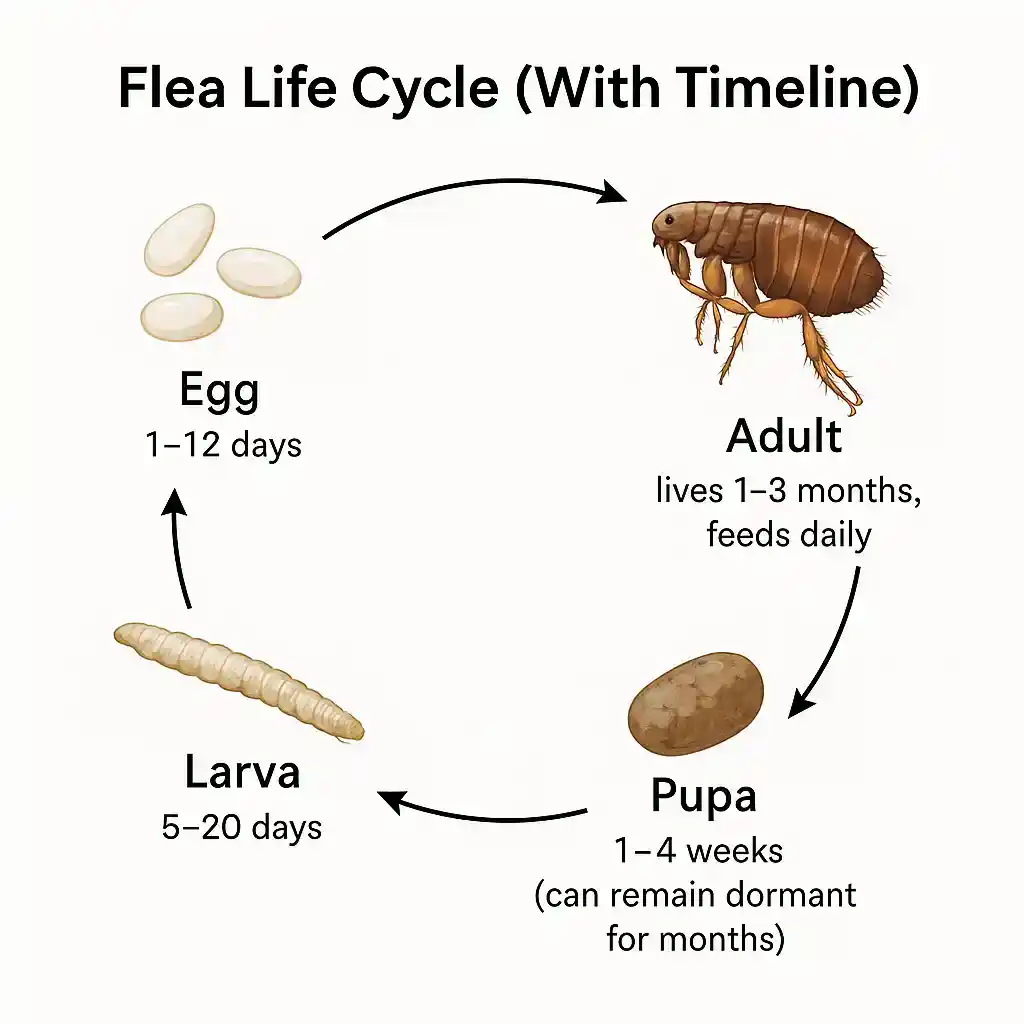
Stage 1: Eggs — The Sprinkle of Invisible Chaos
Eggs are laid on your pet but fall into carpets, bedding, furniture, and vehicles. A female flea lays up to 50 eggs per day. Eggs hatch within 1–12 days depending on warmth and humidity.Stage 2: Larvae — The Light-Shy Carpet Ninjas
Larvae avoid sunlight and move deep into fabrics, cracks, or dust. They feed on organic debris, especially flea dirt.- Vacuuming reduces larval survival drastically.
- Sunlight exposure kills larvae quickly.
Stage 3: Pupae — The Fort Knox Cocoons
Pupae form sticky cocoons that protect them for weeks or months. They hatch when triggered by vibration, heat or carbon dioxide. This is often why fleas appear after you vacuum or walk into the room.Stage 4: Adults — The Jumping Vampires
When the adult flea emerges, it jumps onto a host within minutes and begins feeding immediately. Females start laying eggs within 24 hours.Why Understanding the Life Cycle Helps You Win
Each stage requires its own strategy:- Eggs: Wash bedding and vacuum regularly.
- Larvae: Vacuum and expose fabric items to sunlight.
- Pupae: Mechanical agitation to break open cocoons.
- Adults: Use veterinarian-approved flea treatments.
Flea Anatomy and Their Favourite Hideouts
Fleas are flat, wingless insects built for stealth and outrageous jumping skills. They hide in carpets, bedding, upholstery, curtains, flooring cracks, and even your car — especially if your pet travels with you.
How to Spot Fleas Before Your Home Turns into Itch City
- Scratching, licking or biting
- Black flea dirt specks that turn red when wet
- Tiny fast-moving insects
- Red bumps or scabs on pets
- Human ankle bites
Flea-Borne Risks and Parasites
Fleas can transmit tapeworms, cause allergic reactions and spread bacteria. Homes with wildlife or rodents nearby face higher risk of additional flea-borne pathogens.How Fleas Enter South African Homes
- Gardens, lawns and parks
- Neighbourhood pets that roam freely
- Rodents or wild birds
- Your own clothing or shoes
- Missed or late flea treatments
Treating Dogs and Cats — What Actually Works
For Dogs
- Monthly or quarterly chewable preventatives
- Spot-on treatments
- Flea shampoos during outbreaks
- Daily flea combing for monitoring
For Cats
- Only cat-safe topical or oral flea products
- Monthly preventatives
- Gentle flea combing around neck and tail base
How to Evict Fleas from Your Home
- Vacuum daily for 7–10 days
- Wash bedding in hot water
- Mop floors with soapy water
- Use a flea comb daily
- Clean cars, rugs, curtains and other soft surfaces
Safe Home Remedies That Support Flea Control
- Diatomaceous Earth (food grade)
- Lemon spray for dog bedding
- Lavender or eucalyptus sachets
- Baking soda or salt on carpets
- Sunlight exposure for bedding and mats

Long-Term Flea Prevention Strategy
Use preventative flea treatments consistently, vacuum weekly, wash bedding every few weeks, keep gardens trimmed, and check pets after outdoor activities. Prevention is significantly easier than treatment.Conclusion — You and Your Pets Are Going to Be Okay
You are not alone. Almost every pet parent deals with fleas at some point. They are not a sign of dirtiness, only opportunistic little troublemakers who thrive in active homes. With consistent pet treatment, proper home cleaning and an understanding of the flea life cycle, you can take control and end the infestation for good. Your pets will be happier, your home will be calmer, and your ankles will finally stop itching. You have got this — and Biksie has your back.Frequently Asked Questions About Fleas in South Africa (Straight, No Fluff)
Flea treatments kill adult fleas, but eggs, larvae, and pupae remain hidden in carpets, sofas, bedding, cracks, and rugs. These stages can continue hatching for 3–6 weeks after treatment. To stop the cycle, you must treat your pets consistently AND clean your home thoroughly. Vacuuming, washing bedding, and using environmental controls are essential.
Most households need 3–6 weeks to eliminate fleas completely. Because pupae can remain dormant, new fleas may continue emerging even after treatment. The fastest results come from combining: pet treatment, daily vacuuming, weekly hot washes, sunlight exposure, and preventing reinfestation from outdoors or other animals.
This could be due to: flea allergy dermatitis (one bite triggers severe itching), newly hatched fleas jumping on before the product kills them, or incorrect product use (wrong dose, washed off too soon). If itching continues for more than a week or sores appear, consult a vet to check for allergies or secondary infections.
Natural methods like diatomaceous earth, lemon spray (dogs only), vacuuming, salt or baking soda on carpets, and sunlight exposure can help reduce flea numbers. However, a heavy infestation usually requires vet-approved flea treatments. Natural supports are best used alongside proper preventatives, not instead of them.
Fleas can bite humans, especially when pets are untreated or when flea populations are high. Flea bites appear as small, red, itchy bumps—often in clusters—around ankles, legs, or wherever you sit. They are extremely common during infestations and not usually dangerous, though scratching can cause infection.
Vet-approved flea treatments are safe when used correctly. Avoid using dog products on cats (toxic), mixing multiple flea treatments, using incorrect doses, or bathing pets too soon after applying topicals. Always read the label and consult a vet if your pet is very young, old, pregnant, or has health conditions.
The most effective long-term flea control strategy is a three-part plan: (1) treat all pets every month (or as recommended), (2) vacuum and wash bedding regularly, and (3) manage outdoor areas like gardens and patios. Breaking the flea life cycle is the key to permanent prevention.
Yes — and they love it. Fleas don’t usually stay on humans, but your bedding is warm, dark, and cosy… basically a five-star resort for flea eggs, larvae, and pupae. Adult fleas may hide in sheets or blankets during the day and jump onto your pet (or you!) when movement wakes them. Hot washes and sunlight are your best defence.
Not in the way humans do. Fleas don’t have eyelids, and they remain active until they die. They may slow down briefly if conditions are cold or dry, but they never truly “rest.” They’re basically tiny caffeine-powered acrobats.
No. Fleas don’t find humans “comfortable” enough to live on. We have the wrong temperature, wrong hair density, and we shower far too often for their liking. They’ll bite us — oh yes — but they won’t move in long-term. However, they can and do live in our environment, which leads to repeated bites.
Fleas are ridiculously good jumpers. An adult flea can leap up to 33 cm vertically and around 19 cm horizontally — which is about 100 times their own body length. Impressive? Yes. Terrifying? Also yes.
But… they’re not long-distance athletes. They can’t jump across a room or down a hallway like tiny parkour champions. What actually happens is that fleas move from room to room by catching a ride — on pets, people, blankets, clothing, or even vacuum bags.
So no, they’re not flying ninjas. They simply let you act as their Uber driver while they enjoy the ride.
Gauteng doesn’t really have a “proper” flea season — we have more of a year-round flea reality. Because our winters are mild and our summers are warm and humid, fleas stay active in every season. However, there is a peak:
- Peak flea season: September to April (spring → late summer)
- Moderate activity: May to August (autumn & winter)
Here’s why Gauteng is basically a flea paradise:
- Mild winters — warm homes with heaters keep fleas alive.
- Humidity during thunderstorms — larvae and eggs hatch faster.
- Dense suburbs + pets — easy flea host-hopping opportunities.
- Indoor living — fleas survive perfectly inside carpets, couches and bedding.
So while fleas boom in warmer months, they never really disappear. Even in June and July, indoor heating creates the perfect breeding environment. For this reason, vets strongly recommend year-round flea prevention in Gauteng — skipping winter treatments almost always leads to a spring explosion.
Short version? Fleas don’t take holidays in Gauteng. Treat all year, not just in summer.
🦴 Still not sure which product suits your pet best?
Vet’s Note: Flea Infestations Can Become a Serious Health Risk
Fleas are not just an itchy nuisance — they can lead to real medical problems for both pets and people. If your dog or cat develops intense scratching, hair loss, scabs, pale gums, weight loss, or signs of tapeworms, contact your veterinarian promptly.
Most flea-related conditions respond well to timely veterinary care, prescription flea control, and supportive treatment for irritated or infected skin. Never use human medication on pets.
- Virbac South Africa – Flea & Tick Control — trusted local veterinary guidance on safe, effective flea prevention for dogs and cats.
- MSD Vet Manual – Fleas of Dogs — authoritative information on flea biology, diagnosis, treatment, and prevention.
- MSD Animal Health South Africa – Parasite Education — explains flea-borne parasites such as tapeworms and how to prevent them.
Explore our Tick and Flea Repellants
Helpful Links and Additional Resources